





Veterinary Laser Lithotripsy
High-power laser technology for precise stone fragmentation and minimally invasive veterinary procedures.
What is Veterinary Laser Lithotripsy?
Laser lithotripsy uses focused laser energy to fragment urinary or other accessible calculi during minimally invasive procedures. High-power thulium fiber laser technology provides a versatile platform for stone fragmentation and endoscopic applications.
Clinical Applications
Urinary Stone Management
- Bladder stones
- Urethral stones
- Ureteral stones
- Selected renal stone procedures
Endoscopic Lithotripsy
Laser energy can be delivered through an appropriate fiber under endoscopic guidance.
Stone Fragmentation
Depending on stone characteristics and procedural requirements, laser parameters can be adjusted for fragmentation or dusting strategies.
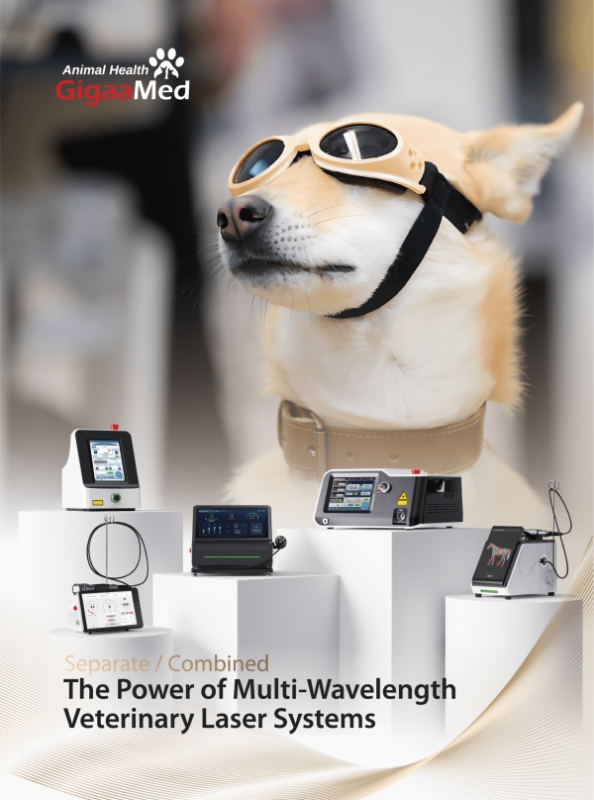
Laser Technology
1940 nm Thulium Fiber Laser Technology
High-Precision Laser Energy for Veterinary Lithotripsy
Thulium Fiber Laser technology at 1940 nm provides a highly effective wavelength platform for laser lithotripsy, particularly in procedures involving water-rich biological tissues and urinary stones.
The 1940 nm wavelength has strong absorption in water, allowing laser energy to be efficiently delivered through a small optical fiber to the target stone.
Depending on the stone composition, size, location and selected treatment parameters, laser lithotripsy can be used to fragment stones into smaller pieces or reduce them to fine particles for subsequent removal or passage.
GIGAA’s high-power 1940 nm Thulium Fiber Laser platform provides flexible power and pulse control for demanding veterinary surgical applications.
How Thulium Fiber Laser Works for Lithotripsy
Why 1940 nm?
High Water Absorption
1940 nm is strongly absorbed by water, resulting in efficient laser-tissue and laser-stone interaction in a fluid environment.
For lithotripsy, this wavelength allows high-energy laser pulses to be delivered through small fibers while providing controlled energy deposition at the treatment site.
Key Technology Benefits
Veterinary Urinary Stone Applications
Laser lithotripsy may be considered for selected urinary calculi in veterinary patients, depending on the stone composition, size, location, patient anatomy and clinical condition.
Potential applications include stones located within:
- Urinary bladder
- Urethra
- Ureter
- Renal collecting system
Treatment selection should be based on veterinary evaluation and appropriate diagnostic imaging.
Thulium Fiber Laser Technology →
Recommended Systems
Clinical Resources
Veterinary Laser Lithotripsy Guide
Thulium Fiber Laser Clinical Guide
Laser Fiber Selection Guide
FAQ
--Laser lithotripsy is a minimally invasive technique that uses focused laser energy to fragment or dust urinary stones into smaller particles that can be removed or managed during the procedure.
In veterinary medicine, laser lithotripsy may be performed using an endoscopic or minimally invasive approach, allowing the laser fiber to be positioned close to the stone.
The laser energy is delivered through a small optical fiber, providing localized energy delivery while reducing the need for conventional open surgical access in appropriately selected cases.
The procedure may be considered for urinary calculi located in the bladder, urethra, ureter or renal collecting system, depending on the animal's anatomy and clinical condition.
Stone composition, size and location should be evaluated before selecting the appropriate treatment approach.
-- Laser lithotripsy can be considered for selected urinary calculi, but treatment suitability depends on stone composition, size, location, patient anatomy and clinical condition.
Depending on the stone characteristics and clinical protocol, laser lithotripsy may be used for selected:
- Bladder stones
- Urethral stones
- Ureteral stones
- Renal stones
Different urinary calculi can respond differently to laser energy. Therefore, stone composition and physical characteristics should be considered when selecting lithotripsy parameters and treatment strategy.
Laser lithotripsy should be performed by appropriately trained veterinary professionals using suitable endoscopic equipment, laser fibers and treatment protocols.
Laser lithotripsy can be performed using different laser wavelengths. Holmium:YAG (Ho:YAG), typically around 2100 nm, has been widely used for stone fragmentation, while 1940 nm Thulium Fiber Laser (TFL) is an advanced alternative for lithotripsy and endoscopic stone treatment.
Ho:YAG vs. 1940 nm Thulium Fiber Laser
| Ho:YAG | 1940 nm Thulium Fiber Laser |
Wavelength | ~2100 nm | 1940 nm |
Laser type | Solid-state laser | Fiber laser |
Water absorption | High | Very high |
Fiber delivery | Yes | Yes |
Lithotripsy | Established technology | Advanced lithotripsy platform |
Soft tissue applications | Yes | Yes |
System characteristics | Established surgical platform | Compact fiber-based architecture with high-power capability |
Both technologies can be used for laser lithotripsy. The appropriate laser depends on the stone characteristics, treatment technique, fiber configuration and clinical requirements.
-- 1940 nm Thulium Fiber Laser provides strong absorption in water, allowing efficient and controlled delivery of laser energy through a small optical fiber. This makes it a suitable platform for selected veterinary lithotripsy and advanced endoscopic surgical applications.
Key Technology Advantages
High Water Absorption
Efficient interaction with water-rich tissue and the fluid environment encountered during endoscopic procedures.
Precise Fiber Delivery
Laser energy can be delivered through a small optical fiber directly to the target area, supporting minimally invasive procedures.
Controlled Energy Delivery
Flexible power and pulse control allows treatment parameters to be adjusted according to the stone characteristics and clinical objective.
Stone Fragmentation & Dusting
Controlled laser energy can be used to fragment urinary stones or reduce them to smaller particles for subsequent removal or management.
High-Power Capability
GIGAA's Thulium Fiber Laser platform provides high-power output for demanding lithotripsy and advanced surgical procedures.
Multi-Application Platform
The same 1940 nm platform can also support selected soft tissue procedures, tissue vaporization and ablation, providing greater versatility for specialty veterinary hospitals.
Designed for Advanced Veterinary Applications
GIGAA's 1940 nm Thulium Fiber Laser platform is designed to provide a versatile high-power laser solution for veterinary hospitals requiring both lithotripsy and advanced endoscopic or soft tissue surgical capabilities.
Treatment parameters should be selected according to stone composition, size, location, target tissue, fiber configuration and clinical protocol.
-- Yes. One of the advantages of a 1940 nm Thulium Fiber Laser platform is its potential to support both lithotripsy and selected soft tissue surgical applications.
For lithotripsy, controlled laser energy can be delivered through an optical fiber to fragment or dust urinary stones.
For soft tissue applications, the strong water absorption of 1940 nm laser energy can support selected procedures involving tissue cutting, vaporization and ablation.
This makes a high-power Thulium Fiber Laser a versatile platform for specialty veterinary hospitals that need a single laser system capable of supporting multiple advanced surgical applications.
The appropriate power, pulse settings, fiber and treatment technique depend on the specific clinical procedure.
--Laser lithotripsy can be performed using minimally invasive or endoscopic techniques in appropriately selected veterinary patients.
A small laser fiber can be introduced through a compatible endoscopic system or access route, allowing the stone to be treated directly under visualization.
Compared with conventional open surgery, minimally invasive stone treatment may reduce the need for large surgical incisions and can be particularly useful when appropriate endoscopic access is available.
However, suitability depends on the patient's anatomy, stone location and size, available equipment and the veterinarian's clinical assessment.
--The appropriate laser power depends on the laser wavelength, pulse parameters, stone composition, stone size, treatment technique and clinical objective.
Higher-power Thulium Fiber Laser systems can provide greater flexibility for demanding lithotripsy procedures, while power and pulse settings can be adjusted according to the treatment strategy.
GIGAA's 1940 nm Thulium Fiber Laser platform can provide up to 400 W output, giving specialty veterinary hospitals a high-power platform for lithotripsy and other advanced surgical applications.
The actual treatment parameters should always be selected according to the stone characteristics and professional clinical protocol.
Recommended System
GIGAA 1940 nm Thulium Fiber Laser
Up to 400 W | 1940 nm
High-power Thulium Fiber Laser platform for advanced veterinary lithotripsy and surgical applications.
Designed for:
- Veterinary laser lithotripsy
- Urinary stone fragmentation
- Endoscopic procedures
- Soft tissue surgery
- Tissue vaporization and ablation
- Advanced minimally invasive procedures
Explore Thulium Fiber Laser →
Need Help Selecting a Lithotripsy Laser?
Our team can help you evaluate wavelength, power, fiber configuration and system compatibility according to your intended veterinary applications.
Contact Our Veterinary Laser Specialist →