



Veterinary Laser Therapy for Rehabilitation & Pain Management
Class 4 veterinary laser systems designed to support pain management, rehabilitation, tissue repair and recovery across a wide range of veterinary applications.
What is Veterinary Laser Therapy?
Veterinary laser therapy uses therapeutic laser energy to deliver controlled photobiomodulation to targeted tissues. Depending on wavelength, power and treatment parameters, laser therapy can be incorporated into veterinary rehabilitation programs for pain management, inflammation control, tissue recovery and functional rehabilitation.
GIGAA veterinary laser systems support flexible treatment approaches for small animals, large animals and equine rehabilitation.
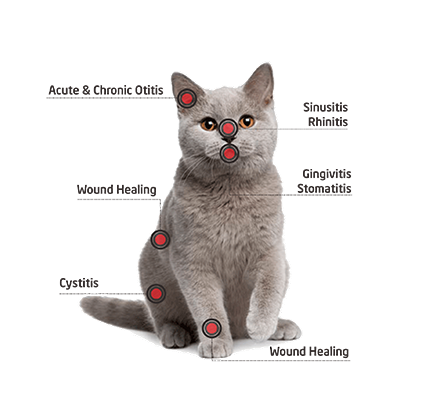
Clinical Applications
Laser Technology
Multi-Wavelength Veterinary Laser Platform
Different veterinary applications require different wavelengths, treatment depths and energy delivery parameters. GIGAA’s multi-wavelength laser platforms provide flexible options for veterinary rehabilitation, pain management, photobiomodulation and other clinical applications.
Depending on the system configuration, GIGAA veterinary lasers can support wavelengths ranging from visible light to near-infrared laser energy, allowing veterinary professionals to select the appropriate wavelength and treatment parameters according to the target tissue, clinical application and treatment protocol.
Recommended Wavelengths
| Wavelength | Typical Application Positioning |
|---|---|
| 405 nm | Selected photobiomodulation and light-based veterinary applications |
| 445 / 450 nm | Blue laser applications and selected tissue / photobiomodulation applications |
| 532 nm | Selected vascular and light-based clinical applications |
| 635 / 650 / 660 nm | Superficial photobiomodulation and therapeutic laser applications |
| 810 nm | Deeper photobiomodulation and therapeutic applications |
| 910 / 915 nm | Selected therapeutic and tissue-interaction applications |
| 980 nm | Therapeutic and surgical applications requiring higher tissue absorption |
| 1064 nm | Selected deeper tissue and advanced therapeutic applications |
Wavelength selection should be based on the target tissue, treatment objective, animal species and clinical protocol.
Flexible Wavelength Options for Veterinary Laser Therapy
GIGAA veterinary laser systems are available in multiple wavelength configurations, including 405 nm, 445 nm, 450 nm, 532 nm, 635 nm, 650 nm, 660 nm, 810 nm, 910 nm, 915 nm, 980 nm and 1064 nm.
These wavelength options allow GIGAA platforms to address different veterinary applications, from superficial photobiomodulation and rehabilitation to deeper tissue therapy and selected surgical procedures. Multi-wavelength systems can provide additional flexibility for veterinary clinics, rehabilitation centers, specialty practices and research institutions.
The appropriate wavelength, output power, treatment mode and delivery accessory should be selected according to the intended clinical application and professional veterinary protocol.
Recommended Systems
Clinical Case Studies
Canine rehabilitation
Joint pain management
Soft tissue injury
Equine recovery
Clinical Resources
Veterinary Laser Therapy Guide
Rehabilitation Protocol Guide
Photobiomodulation Guide
Veterinary Laser Clinical Guide
FAQ
Veterinary laser therapy is a non-invasive treatment approach that uses specific wavelengths of laser energy to support tissue response through a process known as photobiomodulation.
During treatment, controlled laser energy is delivered to targeted areas of the body. Depending on the wavelength, power level and treatment parameters, laser therapy may support cellular activity, local circulation, tissue recovery and pain management as part of a comprehensive veterinary care program.
GIGAA veterinary laser systems are designed for professional veterinary applications, including rehabilitation, pain management, wound care, postoperative support and sports medicine for small and large animals.
Class 4 veterinary lasers provide higher power output compared with lower-level laser devices, allowing veterinarians and rehabilitation specialists to select appropriate treatment parameters based on animal size, clinical requirements and treatment goals.
Veterinary laser therapy is commonly integrated with other veterinary approaches, including physical rehabilitation, medication management, exercise programs and surgical care when appropriate.
Veterinary laser therapy can be incorporated into rehabilitation and supportive care programs for a wide range of conditions affecting small animals, large animals and equine patients.
Common applications may include:
- Musculoskeletal rehabilitation
- Joint and mobility support
- Soft tissue injuries
- Tendon and ligament rehabilitation
- Postoperative recovery support
- Wound management
- Pain management programs
- Sports medicine and performance recovery
In canine and feline rehabilitation, veterinary laser therapy is often used as part of multimodal programs designed to support mobility, comfort and functional recovery.
For equine applications, high-power veterinary laser systems can be used in rehabilitation and sports medicine programs involving performance horses, working animals and large animal care.
Treatment decisions should always be based on veterinary assessment, clinical indication and an appropriate treatment protocol.
Yes, Class 4 laser therapy can be used in professional veterinary settings for dogs and cats when operated by trained veterinary professionals following appropriate safety guidelines and treatment protocols.
Compared with lower-power laser devices, Class 4 veterinary lasers provide higher output levels and greater flexibility in treatment delivery. This allows veterinarians and rehabilitation specialists to adjust parameters according to the animal's size, condition, treatment area and clinical objectives.
Common applications in dogs and cats may include:
- Rehabilitation programs
- Musculoskeletal support
- Pain management
- Postoperative rehabilitation
- Soft tissue recovery
- Wound management
GIGAA veterinary laser systems offer multiple wavelength configurations and power options, allowing clinics to select a platform suitable for general veterinary practice, specialty hospitals and rehabilitation centers.
Veterinary laser therapy can be incorporated into postoperative rehabilitation programs when considered appropriate by the veterinarian.
After surgery, veterinary teams may use laser therapy as part of a broader recovery plan that may include wound management, controlled exercise, rehabilitation therapy and other supportive care approaches.
Potential applications after surgery may include:
- Supporting tissue recovery
- Managing postoperative discomfort
- Supporting mobility during rehabilitation
- Assisting recovery protocols following soft tissue procedures
The timing, treatment area, wavelength selection and energy parameters should be determined according to the surgical procedure, patient condition and veterinary evaluation.
GIGAA laser systems are designed to provide flexible treatment options for veterinary clinics, rehabilitation centers and specialty practices.
Veterinary laser therapy can use different wavelengths depending on the treatment objective, target tissue, treatment depth and clinical protocol. There is no single wavelength that is suitable for every veterinary application.
Shorter visible wavelengths, such as 405 nm, 445/450 nm and 532 nm, can be selected for specific light-based, superficial or tissue-interaction applications.
Red wavelengths, including 635 nm, 650 nm and 660 nm, are commonly associated with superficial photobiomodulation and therapeutic laser applications.
Near-infrared wavelengths, such as 810 nm, 910/915 nm, 980 nm and 1064 nm, provide different tissue interaction characteristics and can be selected for applications involving deeper tissue treatment, therapeutic laser procedures or surgery, depending on the wavelength and treatment protocol.
GIGAA multi-wavelength veterinary laser platforms allow veterinary professionals to select different wavelength configurations according to the intended application. The appropriate wavelength and treatment parameters should always be determined based on the animal, target tissue, clinical objective and professional veterinary protocol.
Wavelength selection depends on several factors, including the target tissue, treatment depth, clinical objective, animal species, treatment area and required energy delivery.
For example, veterinary rehabilitation applications may use different wavelengths from those selected for soft tissue surgery or other specialized procedures. A multi-wavelength laser platform provides greater flexibility by allowing veterinary professionals to select the appropriate wavelength and treatment parameters for different clinical applications.
When selecting a veterinary laser system, clinics should consider not only wavelength, but also output power, operating modes, fiber or handpiece options, treatment protocols and software controls.
GIGAA offers single- and multi-wavelength veterinary laser platforms for general practice, rehabilitation centers, specialty veterinary hospitals, equine facilities and research institutions.
Contact GIGAA to discuss the appropriate wavelength and system configuration for your application.
Veterinary laser therapy is typically integrated as one component of a comprehensive rehabilitation program rather than used as a standalone treatment.
A veterinary rehabilitation workflow may include:
- Patient Assessment
The veterinary team evaluates the animal's condition, mobility, pain level and rehabilitation goals.
- Treatment Planning
Appropriate laser parameters are selected based on the patient's size, treatment area, clinical objective and rehabilitation stage.
- Laser Therapy Application
Controlled laser energy is delivered using suitable handpieces or accessories according to the treatment protocol.
- Rehabilitation Program Integration
Laser therapy may be combined with other rehabilitation approaches, including therapeutic exercise, physical therapy, mobility training and supportive care.
For small animals, veterinary laser therapy may support rehabilitation programs for dogs and cats recovering from injury, surgery or mobility-related conditions.
For equine patients, high-power laser systems can be incorporated into sports medicine and performance rehabilitation programs.